
The Careers of Philip's Friends
Of Human BondagePhilip's friendships reveal different responses to ambition, comfort, artistic risk, and the demands of living.
increasing Bearing strength in each event
 decreasing
Bearing strength in each eventdecreasingLawson's Steady Craft
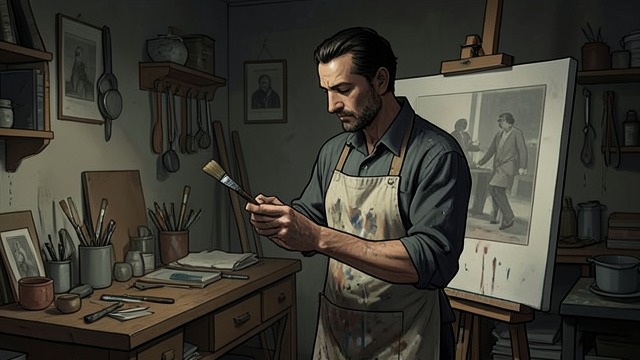
Lawson's Steady Craft
Lawson works steadily at painting, exhibits portraits, and eventually builds a modest professional career. He is less visionary than some companions but more willing to produce work and adapt to opportunity.
Success without grand theory
His path contrasts with Philip's self-doubt and Clutton's perfectionism. Lawson's practical progress shows that artistic life can involve compromise and persistence rather than a single decisive masterpiece.
Clutton's Withdrawal
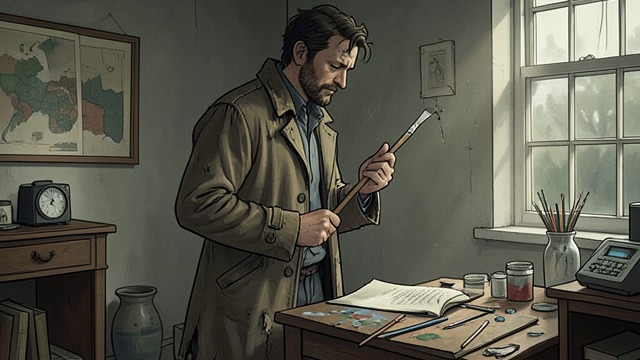
Clutton's Withdrawal
Clutton rejects the methods he has learned, destroys much of his work, and retreats from public competition. He seeks an original vision but gives others little way to judge whether he has found one.
The danger of perfection
Philip suspects that Clutton's refusal to show his work may protect him from failure as much as it serves art. His future remains unresolved, a warning about ambition that never risks completion.
Flanagan's Change of Trade
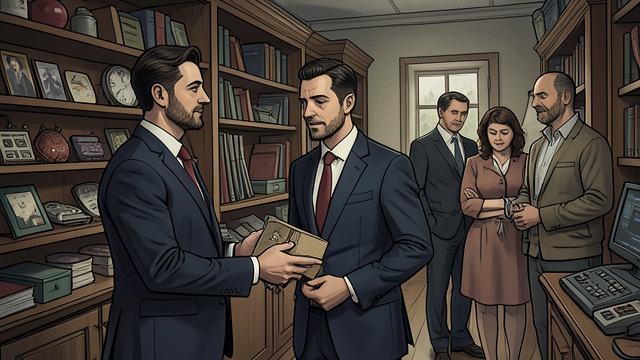
Flanagan's Change of Trade
Flanagan abandons art and returns to business, apparently making money in the popper trade. His earlier painterly confidence gives way to a practical career and domestic life.
An ordinary outcome
His departure challenges the romantic idea that every art student is destined for artistic sacrifice. For many, life offers a different occupation without turning the change into catastrophe.
Upjohn's Literary Reputation
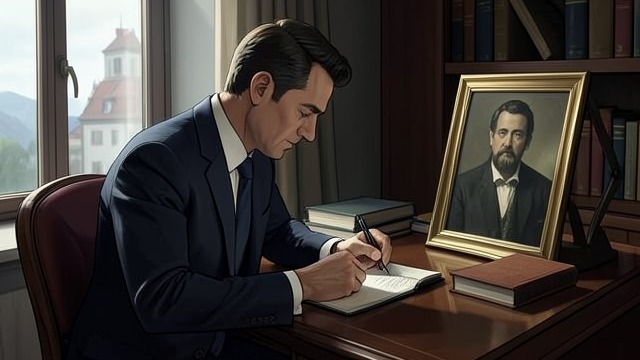
Upjohn's Literary Reputation
Leonard Upjohn turns Cronshaw's difficult final months into a graceful article, presenting himself as the poet's sympathetic friend. Philip recognises the distance between Upjohn's account and the practical help he did not provide.
A career made from death
The article advances Upjohn's standing while shaping public memory of Cronshaw. His success illustrates how a persuasive narrative can replace the complicated truth of another person's life.
Doctor South's Solitude
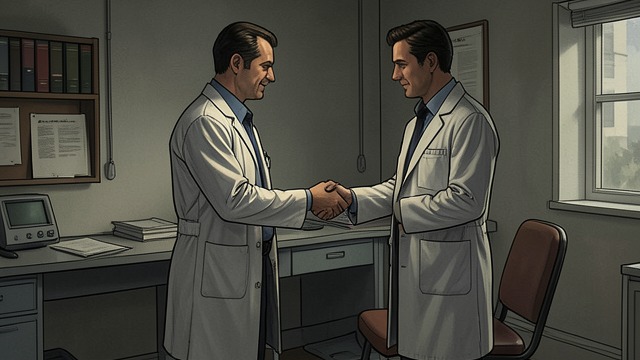
Doctor South's Solitude
Doctor South lives alone after a long medical career and has become suspicious of fashionable methods and younger practitioners. Philip's humour and competence gradually earn his respect.
A late invitation
South offers Philip a partnership, hoping to keep useful company near him. Philip declines to travel, leaving South alone again but with a rare experience of genuine attachment.
during Philip's Paris art years
during Philip's final years in Paris
after Philip leaves Paris
after Cronshaw's death
after Philip qualifies and visits Farnley
